May 2026
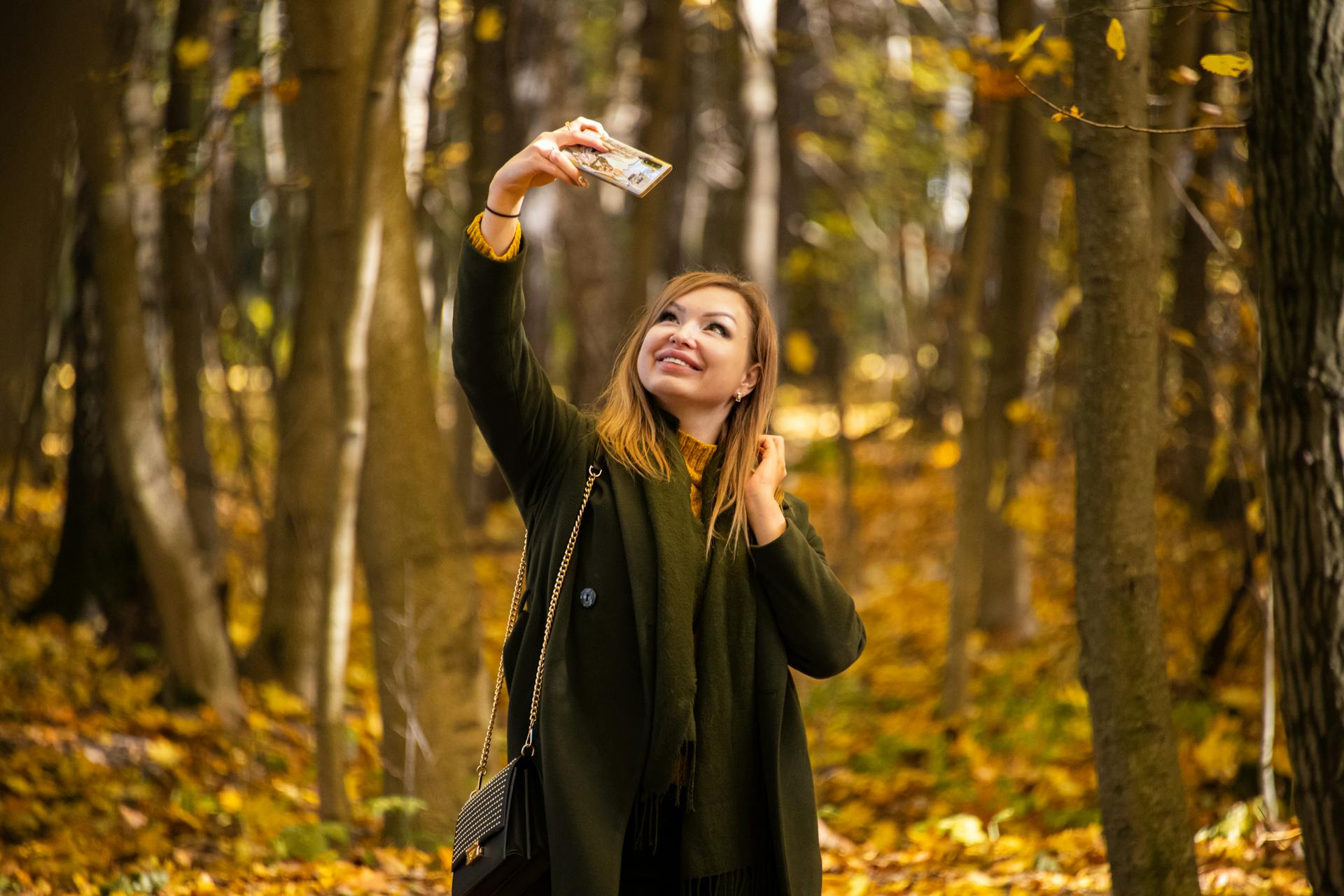
📸 Don't Take Selfies!
Twenty years ago, taking a selfie was unusual. In fact, most people didn't even have the technology to do it easily. Phones had terrible cameras, there were no front-facing lenses, and social media barely existed. If someone wanted a photograph, they usually took a picture of something meaningful: a landscape, a group of friends, a family event, or a special moment. The focus was the experience itself.
Today, almost everything has changed.
Now people stand in front of sunsets instead of looking at them. They climb mountains not to enjoy the climb, but to document themselves at the top. Meals are photographed before they are eaten. Concerts are watched through phone screens. Holidays become content production exercises. Entire lives are increasingly performed for invisible audiences online.
And at the center of this transformation sits one small habit that seems harmless at first:
👉 the selfie.
📱 The selfie changed how we experience reality
The selfie is more than just a photograph. It represents a subtle psychological shift in how humans experience reality itself.
The moment you begin regularly taking selfies, you start walking down a road where experiences slowly become less important than being seen having those experiences.
At first, it feels innocent. You take a photo because you want to remember a moment. But gradually, something changes. The memory is no longer enough. The internal satisfaction is no longer enough. The event starts to feel incomplete unless other people witness it too.
This raises an uncomfortable question:
❓ Why does your face need to be in the photo?
Imagine standing in front of a beautiful mountain lake at sunset. One photograph captures the lake itself: the colors, the atmosphere, the stillness, the beauty of nature.
The second photograph is exactly the same scene — except now your face is taking up a large part of the image.
Why?
What has improved?
Objectively, the landscape has not become more beautiful because your face is in front of it. In many cases, the photograph itself becomes worse artistically. The real purpose of the image has changed. It is no longer mainly about the mountain, the lake, or the sunset.
👉 It is now about you being there.
More specifically, it is about proving to other people that you were there.
That distinction matters.
🧠 Social media and psychological validation
Human beings have always cared about social status and recognition. But social media has amplified this instinct to an extreme level never before seen in history. Platforms are designed to reward visibility, attention, validation, and performance. Likes, comments, and shares become tiny psychological rewards that train people to constantly present idealized versions of themselves.
The result is that life slowly transforms into theater.
People begin curating experiences not for personal meaning, but for public display.
- 👉 Restaurants chosen because they "look good on Instagram"
- 👉 Holiday destinations selected because they photograph well
- 👉 Activities valuable mainly because they can be posted online
- 👉 Moments created more to display than to live
🌲 "If a tree falls in a forest…"
This creates a strange philosophical problem that resembles the famous question:
👉 "If a tree falls in a forest and nobody is around to hear it, does it make a sound?"
This idea is commonly associated with the philosopher George Berkeley, who explored questions about perception and reality centuries ago.
Today, social media has created a modern version of the same question:
👉 "If I did something without posting it online, did I really do it?"
For many people, the subconscious answer increasingly seems to be "no."
⚡ Life becomes performance
That is the dangerous part.
The selfie culture subtly changes the purpose of experience itself. Instead of living directly through reality, people begin experiencing reality through the imagined eyes of others. Every moment becomes evaluated according to how it might appear online.
👉 The internal world weakens.
👉 The external performance strengthens.
Climbing a mountain used to be about challenge, solitude, reflection, nature, or personal achievement. Now many people reach the top and immediately start taking dozens of photographs of themselves. The achievement itself becomes secondary to documenting the achievement.
The irony is that this constant documentation often reduces genuine enjoyment of the moment. Studies increasingly suggest that excessive photographing can interfere with memory formation and emotional presence. When your brain shifts into "content creation mode," part of your attention leaves the experience itself.
You stop fully living moments because part of you is already converting them into future social media posts.
🚨 When attention becomes an obsession
And once this mindset becomes normalized, it does not stay confined to harmless selfies.
👉 It expands.
People begin making increasingly irrational and dangerous decisions because of the temptation to record, film, or photograph themselves. Tourists lean over cliffs for dramatic pictures. Influencers risk their lives on skyscrapers. Drivers film themselves while speeding. Some people stage fake generosity, fake lifestyles, fake relationships, or fake emotions purely for engagement online.
The logic becomes simple:
👉 attention equals value.
The more visible you are, the more real you feel.
🌐 Identity becomes a product
Social media platforms exploit this vulnerability perfectly because human beings are deeply social creatures. We naturally seek approval, admiration, and belonging. But previous generations experienced these desires within relatively small communities. Today, the audience is potentially global and permanently available twenty-four hours a day.
This changes human behavior profoundly.
People increasingly compare their ordinary lives to carefully edited highlights from thousands of strangers online. Reality begins losing against performance. Quiet private happiness becomes less attractive than visible public validation.
Even personal identity itself starts becoming a product.
Many people no longer ask:
👉 "What kind of life do I genuinely want?"
Instead they ask:
👉 "What kind of life looks impressive online?"
These are not the same question.
🔚 So… what is the real problem?
Of course, photographs themselves are not evil. Humans have always documented memories. A family photo album is something beautiful. Photography can preserve history, art, emotion, and genuine moments.
👉 The issue is not photography.
👉 The issue is psychological dependence on external witnessing.
Can you still enjoy something completely privately?
Can you climb a mountain, sit silently at the top, admire the view, and leave without needing to prove it to anyone?
Can an experience still have meaning if nobody else sees it?
These questions are becoming increasingly important in the digital age because modern technology constantly pushes people toward performance rather than presence.
The danger of selfies is not the photograph itself.
The danger is what the habit slowly teaches the mind:
👉 that experiences only matter when they are observed by others.
But some of the most meaningful moments in human life happen privately:
- 👉 a quiet walk
- 👉 a deep conversation
- 👉 a personal victory
- 👉 a sunset seen alone
- 👉 a moment of reflection nobody else will ever know about
Those moments still matter.
Even if nobody clicks "like."
Ready to do it the smart way?
Start practicing today with the Oxbridge English translator and turn every translation into a real lesson.
View Courses Try SmarTranslator