August 2026
What Colombia Has Taught Me About Being Human
Sixteen years ago, I moved to Colombia, and like anyone arriving in an unfamiliar country, I noticed the differences almost immediately. Some were obvious enough: the food, the climate, the language, the music, the particular Colombian talent for turning any gathering into a party with remarkably little notice. Others were far more subtle, and it took years — rather longer than I care to admit — before I properly understood what I was actually looking at.
One of the first things I noticed, and noticed with some discomfort, was that people here did not seem to follow rules in quite the manner I had been raised to expect in Northern Europe.
At first, this struck me as simply frustrating, in the way that unfamiliar things so often do before we've bothered to understand them.
Then I noticed something else, something that took rather longer to register: people here were also remarkably relaxed when somebody else broke a rule.
The clearest illustration of this, as it happens, is driving.
In Northern Europe, driving tends to be a highly regulated affair, governed by an unspoken but rigorously enforced social contract. Everyone is expected to follow the rules, and when someone doesn't, the reaction is often immediate and disproportionate fury — a driver cuts in front of you, and you may spend the next five minutes composing, in your head, an increasingly elaborate character assassination of a total stranger you will never see again.
Driving in Colombia feels rather different. It is more organic, more improvisational — a continuous, largely wordless negotiation between everyone on the road at once. There are cautious drivers and impatient drivers, confident drivers and thoroughly nervous ones, and every conceivable combination in between. And somehow, through some process I still can't entirely explain, everyone works it out.
This is not, I should say clearly, an argument that Colombian driving is safer, or that traffic laws are somehow unnecessary. It is simply an observation about the underlying relationship between people and rules — and I have come to think that this small, seemingly trivial distinction tells us something considerably larger about society itself.
When the Rule Becomes Reality
In many developed countries, we have constructed extraordinarily sophisticated systems of rules and institutions, and this has brought enormous advantages. Rules make societies predictable. They protect people, and they allow millions of strangers who will never meet to somehow coexist in reasonable harmony.
But there is, I suspect, a particular danger that emerges once we become so thoroughly accustomed to the system that we simply stop thinking about the reasoning behind it.
The rule, quietly and almost imperceptibly, becomes reality itself.
We begin to believe that something is right because the system says it is right, and wrong because the system says it is wrong — as though the system were some external moral authority rather than a set of decisions made, at some point, by fallible human beings.
Latin American societies, in my experience at least, have retained rather more of the personal element. The governing question is not always simply 'What does the rule say?' but something closer to 'What is actually happening here?'
There are circumstances. There are exceptions. There are, crucially, human beings involved — messy, particular, individual human beings, not abstractions to be processed.
Right and wrong cannot always be reduced quite so neatly to black and white as we might prefer.
This can, admittedly, produce frustration, inefficiency and no small amount of inconsistency. But it can also produce something I have come to regard as increasingly precious: flexibility, patience, understanding, and — that most unfashionable of qualities — compassion.
The Human Response
I have watched this play out countless times in Colombia.
Something happens in the street, and people simply stop.
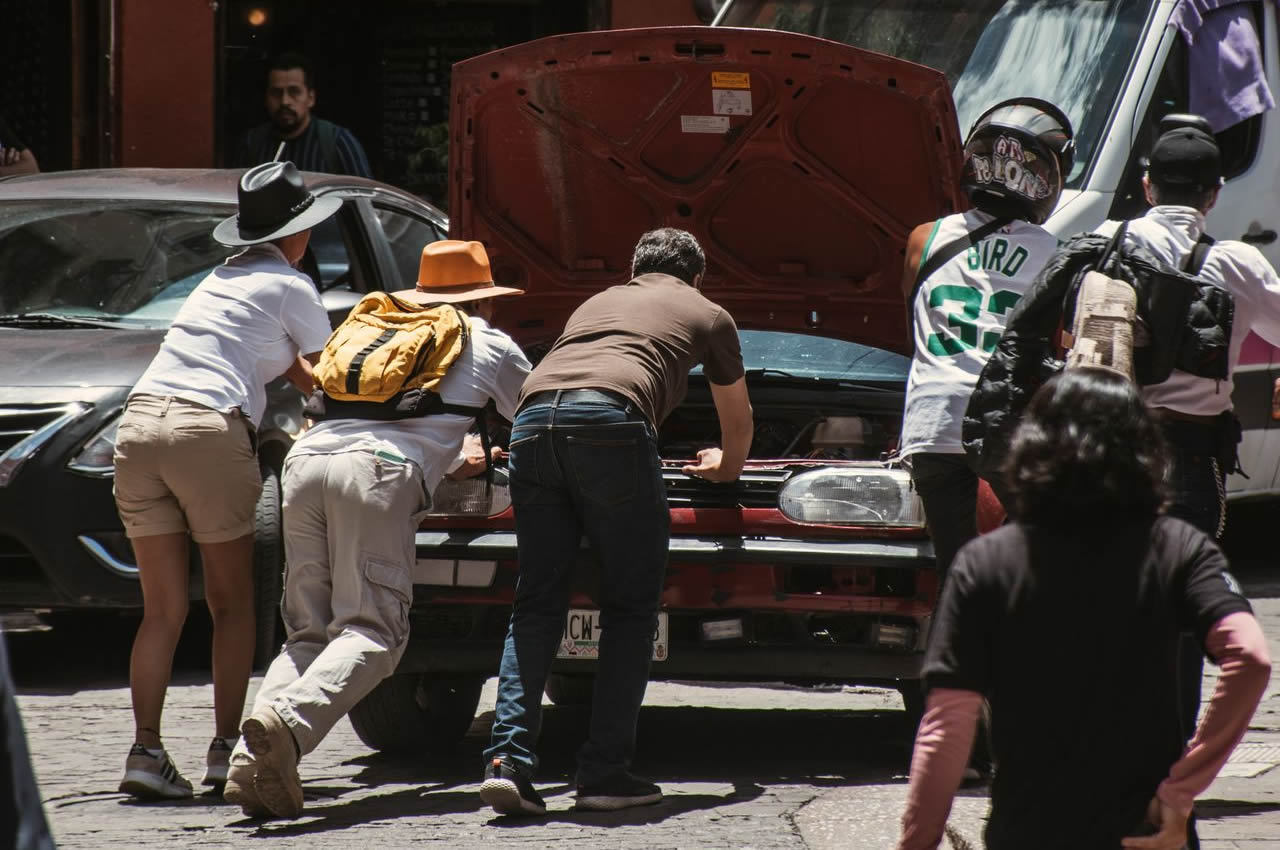
Someone falls, a car breaks down, there is an accident, or somebody plainly needs help — and people tend to get involved without first pausing to establish whose official responsibility it might be.
That instinct, small as it sounds, matters enormously.
One of the things that quietly worries me about certain developed societies is the growing tendency to assume that somebody else — usually the state, or some institution, or a service specifically designed for the purpose — is the one responsible.
That's not really my problem. Someone will deal with it. There's a service for that, surely.
The Colombian instinct, by contrast, tends to be rather more direct: there is a person here who needs help.
And that distinction, small as it may sound when written down, is genuinely profound.
We have seen it again, with terrible clarity, in the earthquake that struck western Colombia on the 10th of August 2026. The magnitude 7.4 quake caused enormous destruction across the region, with Cali, Pereira, Quibdó and other communities badly affected. Thousands of people were injured, homes and public buildings reduced to rubble, and hundreds of people lost their lives.
What has struck me most, amid the tragedy, has been the sheer willingness of ordinary Colombians to help one another. Volunteers, firefighters, community groups, businesses and entirely ordinary citizens mobilised — swiftly and without much fuss — to provide assistance to people they had, in most cases, never met and would likely never meet again.
None of this, I hasten to add, should diminish the considerable contribution of the international community. The United States has provided substantial emergency assistance, the World Bank has announced $200 million toward Colombia's earthquake response and recovery, and various international humanitarian organisations have been closely involved.
But international assistance and community solidarity are not, it seems to me, competing ideas. They are simply complementary ones.
The Pandemic Changed My Mind
There is another example that made me reconsider my early assumptions about this country rather more thoroughly than I expected to.
When the COVID-19 pandemic began, I confess I wondered, with a certain quiet skepticism, how well Colombia would cope with the restrictions that were about to be imposed.
I had, by that point, already formed an impression — not entirely fair, as it turned out — that people here were somewhat less inclined to follow rules than people in Northern Europe. So I braced myself for problems.
Instead, Colombians demonstrated, rather emphatically, that when a rule was genuinely perceived as important, they could follow it with remarkable discipline.
That taught me something worth sitting with.
Perhaps Colombians weren't simply bad at following rules, as I had rather lazily assumed.
Perhaps they were, instead, considerably more selective about which rules deserved following.
A rule is not automatically correct simply because somebody, somewhere, wrote it down. It was written, after all, by another human being — one who may have been sensible, or may have been rather less so. It may be entirely appropriate in one situation and completely absurd in another.
But when people genuinely understand that something matters, they can be extraordinarily disciplined about it.
There are, of course, exceptions — there are always exceptions, in every observation of this kind. I am describing a tendency I have watched unfold over sixteen years, not making some sweeping claim about every Colombian who has ever lived.
Democracy Provides Another Example
The recent presidential election has offered another fascinating demonstration of this same principle.
Colombia moved from a left-wing government under Gustavo Petro to a right-wing one under President Abelardo de la Espriella following the June 2026 election. De la Espriella won the second round by less than a single percentage point — a margin narrow enough to test the patience of any democracy — and the result was formally confirmed by the National Electoral Council.
Most importantly for the point I am making here, Iván Cepeda, the defeated left-wing candidate, publicly accepted the result and recognised De la Espriella as the incoming president.
Petro himself ultimately confirmed that he would hand over power on the 7th of August, precisely as the Constitution required, despite the considerable political tension that had built up around the transition.
There have certainly been disputes along the way, and it would be dishonest to pretend that the process was perfectly harmonious throughout. But the fundamental democratic mechanism held firm: one side won, the other side lost, and power changed hands without the country descending into political violence.
That, whatever else one might say about it, is genuinely something worth recognising.
What We Might Lose
After sixteen years here, I find myself increasingly uninterested in the question of which system is simply better.
Colombia has enormous problems, and there is no sense pretending otherwise. Corruption, inequality, insecurity, poor infrastructure and political division are all real, all serious, and none of them improved by romanticising the country's weaknesses.
But perhaps developed countries, for all their evident strengths, have weaknesses of their own — quieter ones, harder to spot precisely because they don't announce themselves the way a pothole or a power cut does.
We have become extraordinarily good at building systems, procedures and institutions. And yet sometimes, in the very process of building them, we risk forgetting the actual human beings those systems were designed to serve in the first place.
Perhaps the greatest strength of Latin American societies is simply this: the system has not yet completely replaced the person.
People still negotiate. They still improvise. They still ask for help. They still help strangers, without checking first whether it's technically their job to do so. They still make exceptions. They still look at a situation and ask themselves, 'What is the right thing to do here?' rather than reaching immediately for 'What, precisely, does the rule say?'
And I suspect that particular human quality will only become more valuable, not less, as time goes on.
I don't know what Colombia will look like in another sixteen years. But I do know, with some confidence, that living here has permanently changed the way I think about what a successful society actually means.
Perhaps progress isn't simply a matter of building better systems. Perhaps it is also about making quite sure that, while we're busy building those systems, we don't lose the people standing inside them.
And that, ultimately, is why I have come to believe that Colombia — and perhaps Latin America more broadly — may have something genuinely important to teach the rest of the world.
Not because it has solved all its problems. It plainly has not, and would be the first to say so.
But because, despite all of them, it has not yet forgotten how to be human.
Ready to do it the smart way?
Start practicing today with the Oxbridge English translator and turn every translation into a real lesson.
View Courses Try SmarTranslator