September 2026
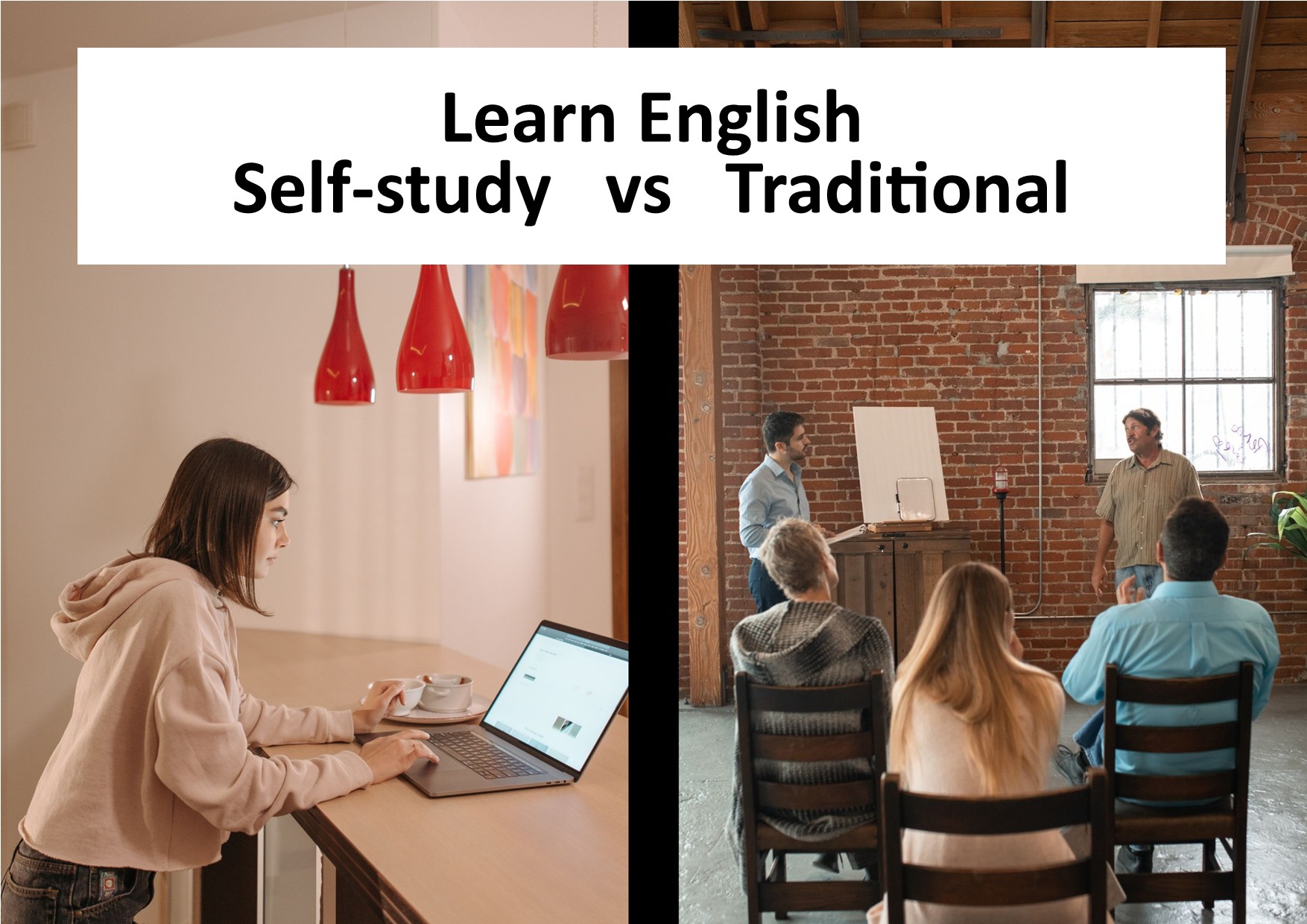
Why You Should Learn English Alone Before You Learn It With a Teacher
There is a widespread idea that the best way to learn English is to find a teacher and start taking classes immediately.
I think that is backwards.
Unless you have the extraordinary opportunity to move to an English-speaking country and immerse yourself in the language every day, the most efficient way to begin learning English is usually to study alone first.
Build the foundations.
Learn the basic structures.
Develop some vocabulary.
Gain a little confidence.
Then, when you are ready to actually use what you have learned, move into personalised 1-to-1 classes with a native teacher.
This is the philosophy behind Oxbridge English, and there is a simple reason for it: your money is better spent on a teacher once you have something to practise.
The problem with traditional classes
Think about what happens in a traditional English class.
You might have 10, 15 or even 20 students sitting in a classroom. The teacher has to keep everybody moving through the same material, at approximately the same speed.
But nobody learns at exactly the same speed.
One student understands the past tense immediately. Another is still confused about the present tense. One is confident and talks constantly. Another is terrified of making a mistake and says almost nothing.
Yet they are all in the same lesson.
The teacher cannot stop for 15 minutes every time one student needs a concept explained again. The class has to continue.
There is another problem: how much time do you actually get to speak?
Even in a well-run class, the teacher has to divide the available time between everyone. If there are ten students and a one-hour lesson, you clearly cannot expect to have an hour of meaningful speaking practice yourself.
And for someone who already feels embarrassed about their English, this can be even worse.
You are surrounded by people who may appear more advanced than you. You have to answer immediately. Other students hear your mistakes. You may become more concerned about not looking foolish than about actually learning.
The same problems exist online.
Putting ten people into a Zoom meeting does not magically turn group learning into personalised teaching.
You may avoid the journey to a classroom, but you still have the problem of different abilities, different personalities, different learning speeds and limited individual attention.
In fact, online group classes can sometimes create another problem: distraction.
Students are sitting in their homes, surrounded by phones, messages, family members and other distractions. The teacher cannot see everything happening off-camera. And once again, the quiet student can disappear into the group.
Group classes certainly have their advantages. They can provide social interaction, motivation and opportunities to communicate. But for the initial stages of learning, they are often an unnecessarily expensive and inefficient way to acquire basic knowledge.
Why self-study is different
Self-study gives you something a traditional class cannot easily provide: control.
You decide when you study.
You decide how quickly you progress.
You can repeat something ten times without worrying about holding anybody else up.
You can pause a video.
Read an explanation again.
Do an exercise tomorrow.
Make mistakes privately.
And that last point is particularly important for adults who feel embarrassed about learning English.
Nobody is watching.
Nobody is waiting for you to answer.
Nobody knows that you got the exercise wrong.
You can build your confidence without the pressure of performing in front of other people.
That makes self-study an ideal environment for learning the basic structures of a language.
Save the expensive teacher for when you need one
There is also a financial argument.
Personalised 1-to-1 lessons with an experienced native teacher cost more than self-study courses. That makes sense: you are buying another person's time, knowledge and attention.
But that time has much greater value once you have reached a certain level.
Imagine paying for a private lesson when you know almost no English.
The teacher may spend much of the hour explaining vocabulary, basic grammar and sentence structures that you could have studied independently.
Now imagine reaching approximately A2 level first.
You already understand the fundamentals.
Now the lesson can be different.
Instead of spending the hour explaining the basic structure of the present perfect, you can use it.
You can have conversations.
You can ask questions.
You can discuss your work.
You can practise pronunciation.
You can be corrected.
You can learn the difference between what is technically correct English and what a native speaker would naturally say.
That is where personalised teaching becomes extremely valuable.
The Oxbridge English approach
This is precisely why Oxbridge English has been developed as a complete system rather than simply another English course.
The idea is to provide a logical progression from zero English towards any level you eventually want to reach.
First, find out where you are.
The free level test helps you identify your starting point, so you are not wasting time studying material you already know.
Then build your foundation with the interactive courses.
The courses take you step by step through the essential structures and vocabulary needed to progress from beginner level towards A2. You can study at home, on your own schedule, and repeat material whenever necessary.
Then there is the Smart Translator.
It does more than simply translate a word. Your translation history gives you a record of the vocabulary you have actually needed. The dictionary helps you investigate words further, while the quiz features allow you to turn those translations into additional practice.
In other words, you are constantly building your own personal vocabulary.
Then there is the Oxbridge English blog.
Reading is an essential part of learning a language, and the blog provides articles about English, learning strategies, interesting ideas, stories and subjects beyond the textbook. The more English you encounter, the more familiar vocabulary, expressions and sentence patterns become.
And then comes the next stage:
1-to-1 personalised classes with a native teacher.
By this point, you are no longer trying to understand everything from scratch.
You have a foundation.
You have vocabulary.
You have some confidence.
Now you need to turn knowledge into ability.
A complete learning package
This is the important distinction.
Oxbridge English is not based on the idea that one product will magically teach you English.
Different tools solve different problems:
- The level test tells you where to begin.
- The interactive courses build the foundations.
- The translator helps develop vocabulary.
- The dictionary helps you investigate language.
- The quizzes provide additional practice.
- The blog develops reading and exposes you to real English.
- And the personalised classes take what you have learned and turn it into communication.
It is a complete progression.
Learn alone first. Learn with a teacher later.
For many learners, particularly those who feel nervous or embarrassed about speaking, this can be a far more comfortable and cost-efficient route than paying for traditional group lessons from the beginning.
You do not need to speak perfect English before you start speaking.
But you also do not need to pay a premium for personalised teaching before you are ready to benefit from it.
Build the foundation yourself.
Reach around A2.
Then bring in the native teacher.
That is the simplest idea behind Oxbridge English.
Study privately. Build confidence. Use the right tools. Then start speaking.
And instead of spending your money from day one on hours of teaching that may be largely devoted to basic explanations, you can use personalised lessons when they can make the biggest difference.
From zero to English — one stage at a time.
Ready to do it the smart way?
Start practicing today with the Oxbridge English translator and turn every translation into a real lesson.
View Courses Try SmarTranslator